
Australian mopar fans might’ve noticed that the Aussie Chargers were not true pillarless cars like their Ford and Holden contemporaries - the Monaro and Falcon hardtop. There's no B pillar on a Charger - which means it is pillarless...but you can't wind the rear window down. Confused? It wasn’t an oversight - to find out the reason, read on...
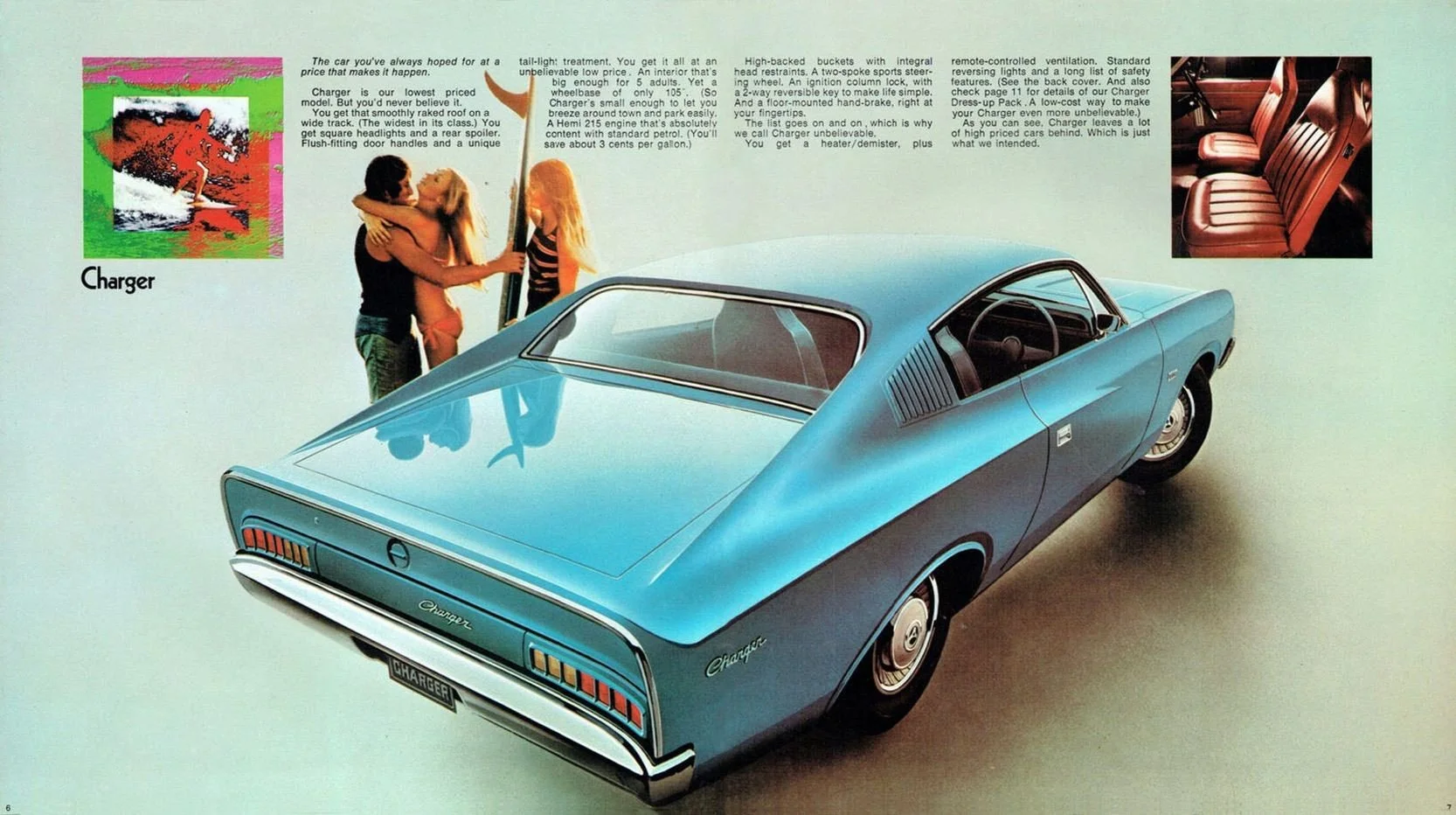
Early promotional image of the all-new 1971 VH Valiant Charger - note there’s no rear side glass if if the windows have been rolled down.
Chrysler Australia had a lot of success selling Dodge Darts as Valiant VF and VG coupes in Oz from ‘69 through ‘71, so American management decided we had to have a replacement when the new, locally designed VH range was on the drawing board.
The Australians weren’t convinced, but were overruled – apparently the Americans knew more about Aussie automotive taste than the locals. So Chrysler went ahead and developed a huge hardtop coupe based on the VH sedan. Deciding there was no point doing things by halves – they gave it the longest boot on any Australian car ever made – before or since.

The massive CH Chrysler By Chrysler two door - rear windows wound down
The VH Regal, Regal 770 and top of the range CH Chrysler By Chrysler hardtops were released with much fanfare...and bombed, just as the Aussies feared. The decision to build a second two-door coupe came late, and had to be done on a strict budget. The Valiant Charger had been designed so that upmarket models, such as the R/T and 770, would have roll-down rear side glass, but the option never appeared.
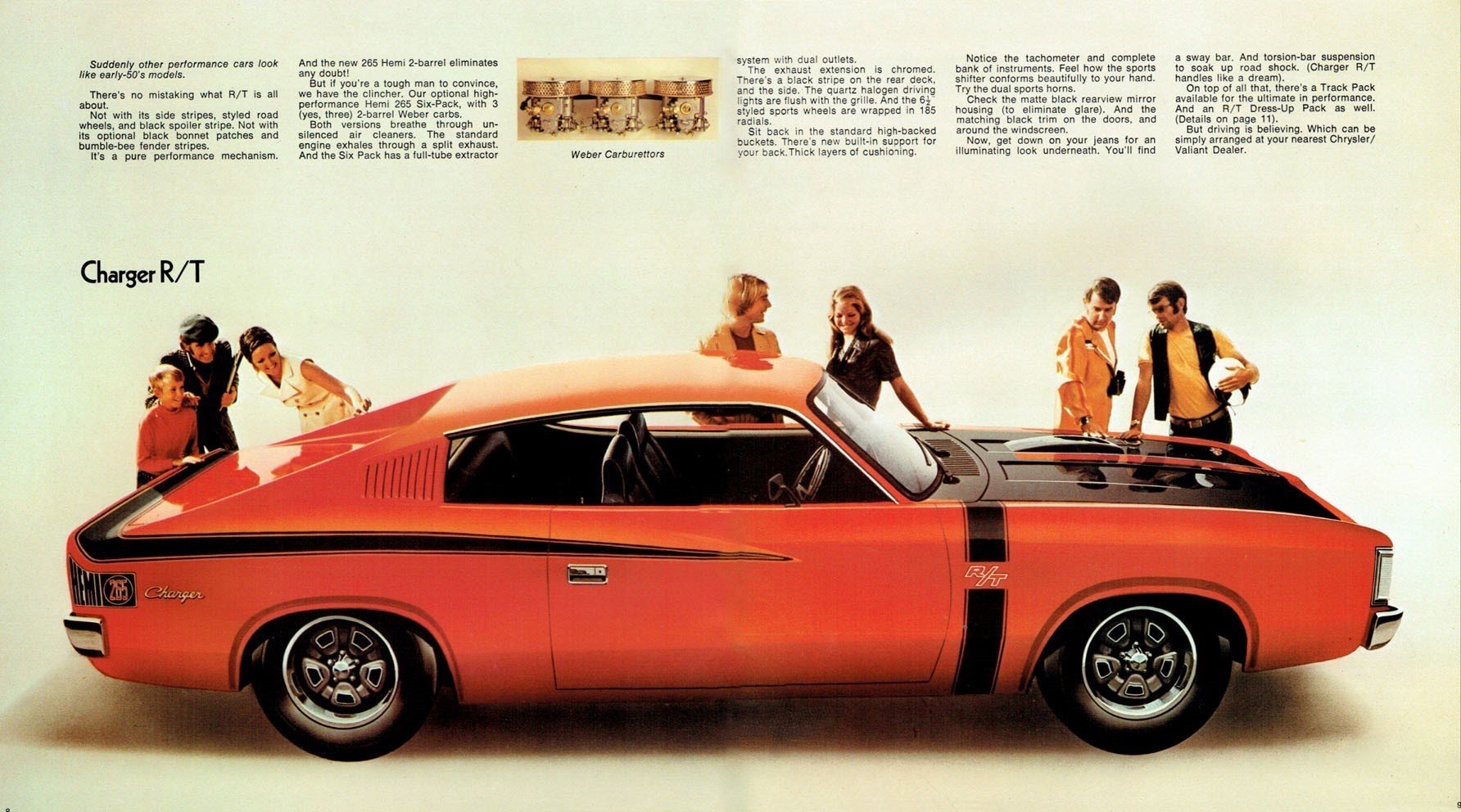
Print ad for the 1971 VH R/T Charger - note the pillarless appearance. This image is an artist’s rendering.
There was enough room in the side panel to accommodate the glass, so one has to assume they simply ran out of time to engineer it, and probably planned to introduce the option later - was it killed off by the 1973 oil crisis? It would’ve been hard to find the money, one assumes, modify to a body shape that had very suddenly become uncool to a lot of buyers looking for more fuel and space efficient transport.

The VH Charger stunned Australia with it’s rakish styling when released to a welcoming public in 1971. Another stylish advertising artist’s rendering.
There was at least one advantage to buying the huge and unloved VH/VJ/CH coupes – they had roll down rear side glass to give passengers and driver the full pillarless experience. But really – apart from a bigger boot, that was the only advantage they offered over the Charger. Interior room was about the same, while performance and handling weren’t quite a match for the shorter, lighter Charger, and neither was fuel economy.

The VH Regal hardtop…with roll-down rear windows - an alternative to the Charger

The luxuriously equipped VJ Charger 770 - if only rear passengers could roll their windows down.
Aussies knew all that. So if you were in the market for a hip, sporty, locally made coupe that could double as family transport – you chose the Charger. If you wanted performance and economy - the Hemi 6 offered both. If you wanted more status - you could go for 318, 340 or 360 cubes. Unless of course your local Ford or Holden dealers could talk you into a HQ Monaro or XA Falcon coupe, but that’s another story...
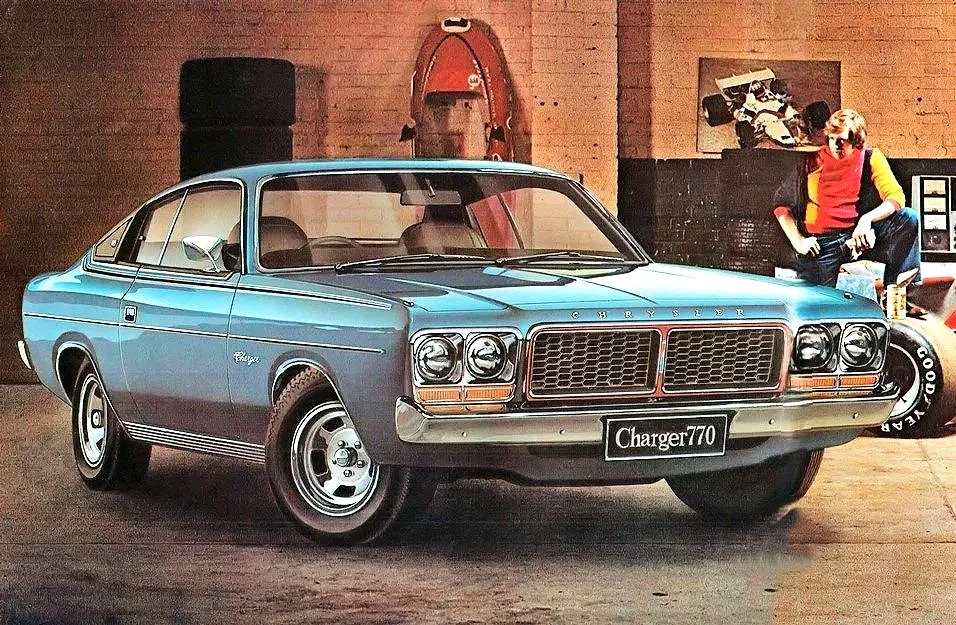
The final Charger was the slow selling CL, released in 1976 with the last few sold in 1978. Vale the Aussie Charger.
About the author
Raph Tripp is a passionate classic car enthusiast and writer, and founder of TunnelRam.net. If you wish to publish this article in part or in whole, please credit Raph Tripp and tunnelram.net . This is an original Tunnel Ram production ©2020 Tunnel Ram. All images remain the property of the original copyright holders.